
Author Ilyon Woo: Conversations from the Sun Valley Writers' Conference
Season 2026 Episode 2 | 28m 50sVideo has Closed Captions
Author Ilyon Woo discusses her Pulitzer Prize-winning book, "Master Slave Husband Wife."
Marcia Franklin talks with author Ilyon Woo about her Pulitzer Prize-winning book, "Master Slave Husband Wife." It examines the harrowing story of Ellen and William Craft, an enslaved couple who disguised themselves and escaped Georgia. Woo discusses what drew her to the story and explains its continued relevance. The interview was taped at the 2026 Sun Valley Writers' Conference.
Problems playing video? | Closed Captioning Feedback
Problems playing video? | Closed Captioning Feedback
Dialogue is a local public television program presented by IdahoPTV
FUNDING FOR THIS PROGRAM IS MADE POSSIBLE BY CONTRIBUTIONS TO THE FRIENDS OF IDAHO PUBLIC TELEVISION FROM VIEWERS LIKE YOU. THANK YOU.
Author Ilyon Woo: Conversations from the Sun Valley Writers' Conference
Season 2026 Episode 2 | 28m 50sVideo has Closed Captions
Marcia Franklin talks with author Ilyon Woo about her Pulitzer Prize-winning book, "Master Slave Husband Wife." It examines the harrowing story of Ellen and William Craft, an enslaved couple who disguised themselves and escaped Georgia. Woo discusses what drew her to the story and explains its continued relevance. The interview was taped at the 2026 Sun Valley Writers' Conference.
Problems playing video? | Closed Captioning Feedback
Where to Watch Dialogue
Dialogue is available to stream on pbs.org and the PBS app.
Dialogue Podcast
Now you can listen to Dialogue wherever you are -- while you exercise, while you drive, or at home. Just search for “Dialogue with Marcia Franklin” on Apple Podcasts and other podcast platforms. And remember to subscribe, so that new shows download automatically!Providing Support for PBS.org
Learn Moreabout PBS online sponsorshipPart of These Collections
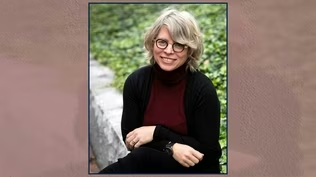
Dialogue Authors Collection
Conversations with all the authors who’ve appeared on Dialogue on Idaho Public Television.
View Collection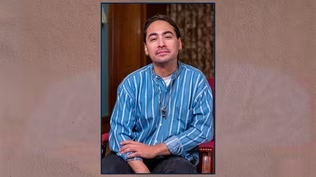
Sun Valley Writers' Conference Collection
A collection of interviews recorded at the Sun Valley Writers’ Conference since 2005.
View CollectionProviding Support for PBS.org
Learn Moreabout PBS online sponsorshipIlyon Woo, Author: They are truly American heroes.
They are not, you know, a sidepiece of history.
They are, they are the main thing.
Marcia Franklin, Host: Coming up, I talk with Pulitzer Prize-winning author Ilyon Woo about her book, "Master Slave Husband Wife."
It chronicles the daring and dangerous escape to freedom by an enslaved couple, and their mission to educate our country about slavery.
That's next on "Conversations from the Sun Valley Writer's Conference."
Stay with us.
[MUSIC] Announcer: Funding for this program is made possible by contributions to the Friends of Idaho Public Television from viewers like you.
Thank you.
Franklin: Hello and welcome.
I'm Marcia Franklin.
Some stories are so fantastic that they seem like fiction.
But they're not.
Such is the case with the remarkable account brought to life in "Master Slave Husband Wife."
The book, written by Ilyon Woo, won the Pulitzer Prize for Biography in 2024.
It reconstructs the harrowing journey of Ellen and William Craft.
The couple, who were married, were enslaved in Georgia in the mid-1800s.
By disguising Ellen - who had light skin -- as a white man, and William as his servant, they managed to travel nearly a thousand miles to the north on trains and boats.
Along the way they were often in dire danger and were nearly discovered several times.
I talked with Woo at the 2026 Sun Valley Writers' Conference about why the Crafts' story continues to captivate her, and the challenges in telling it.
She also shares what it was like to win the Pulitzer Prize.
Franklin: Well, welcome.
Welcome to Ketchum/Sun Valley.
I understand this is your first time here.
Woo: This is my first time and I'm so excited to be here.
Franklin: And you did some fly fishing?
Woo: You could, if you could call it that.
My family fished.
I kind of tried to dunk my rod in.
(Laughs.)
It was very humbling, but beautiful.
Franklin: Well, that's great.
At least you tried.
Woo: I did.
Franklin: .something new.
And congratulations on the Pulitzer.
I know that it's been a couple years now since you heard, but it probably has a long tail and uh, it's really wonderful.
Woo: Thank you.
Franklin: .that you received that.
What was it, where were you when you found out?
Woo: Honestly, I was about to go running with my dog and she was very impatient and she was pulling me out.
And my, you know, phone went off.
And I had no idea.
I had no idea it was that day or anything.
So my world just kind of went completely upside down in a matter of seconds.
It was wonderful to have that recognition of the Crafts' story, especially, and have that new light on this incredible, heroic couple who I feel really honored to know.
And in fact, the very first person I called was, it was actually not my parents.
It was the great-great-granddaughter of Ellen and William Craft.
And, um, that's really a moment that I won't forget.
Franklin: Yeah, that's really, really special.
This is an incredible story and it's one that you first heard about way back when you were in graduate school.
You were assigned to, to read something called "Running a Thousand Miles for Freedom."
Woo: Mm hmm.
Franklin: And it stuck with you all of these years.
What was it about that small book that stayed with you -- gosh, I want to say it was several decades before you actually wrote the book?
Woo: Well, it's slim, but it's mighty.
And it has such an interesting voice.
It's a blend of so many different moods and it really is a edge-of-your-seat drama.
I mean, all the twists and turns, you couldn't make it up.
So that is sort of what brought me to the story originally.
But then there are all kinds of questions that the story raises and sort of invites you to ponder without concrete answers.
And that's sort of where my curiosity got piqued and where that hunger came in to know more.
Franklin: Well, let's - for, for folks watching, let's give a little precis on the Crafts and their incredible journey to freedom.
Woo: Yes.
So Ellen and William Craft were an enslaved couple who were living in the middle of Georgia.
They were a husband and wife.
They wanted to escape slavery for their freedom.
Ellen Craft had a very fair complexion, which she inherited partially from her white father who was also her first enslaver.
And he was a man of immense privilege.
And she used the privilege, um, uh, conferred on that whiteness to pretend to be a rich, white man -- a disabled rich, white man -- so he needs sort of all the more sort of support and help from the people around him.
And her husband William pretended to be his slave.
And it's about their unbelievable journey from Macon, Georgia all the way to Philadelphia and well beyond.
Franklin: Well, we, we know obviously when we read the book that they made it, but you managed to, I think, create that tension and that excitement throughout of all the ways that they were kind of nearly found out or had to keep improvising.
I mean, for one thing, the first improvisation that they came up with that was really interesting -- or Ellen did -- is to make herself disabled so that she wasn't going to have to sign any papers.
Woo: Right.
Franklin: .because she couldn't.
Um, these were, they were not literate.
And so that was first that part of the disguise, but there were so many other ways that they had to improvise.
And you, I think, kept that tension going throughout, which couldn't have been all that easy.
Woo: So I wanted to think about, "How do I amplify those moments?
I'll give an early one, right, when they make it on the train and there are a number of sort of terrifying beats up until that moment.
So finally, Ellen is sitting and then she looks to the side and who should be there but a man who she had served dinner the night before, who's actually a friend of her current enslaver.
He's sitting there right next to her.
And not only that, but he's trying to make conversation with her.
And she's completely terrified.
When you actually find out who he is and what that proximity is, it, it, for me, it even, it, it, it, it increased not only the suspense, but the kind of, I mean the immense respect that I have for this incredible young woman at the time who was able to, as you said, improvise on the fly against these enormous odds.
So I felt like that was my job.
So the Crafts, they're, they're singing a melody.
They give you one sort of camera angle into the story.
And I am trying to go at it from lots of different places.
So if you know what that train feels like, what the stakes were in that moment in terms of the travel, what are all the other odds circumstantially around this particular moment, your heart will pound even more.
Franklin: It's interesting what you say about the melody, because I know your musical background also helped inform you when you were writing this -- that you felt like you wanted to create a symphony.
You even -- you know, the beginning of the book has an overture and then there's a coda.
I mean, so you're, you're winding in musical elements to build this symphony.
Woo: Thank you.
Thank you for noticing that.
And actually, at one point I had completely rewritten the book.
Right now, it's sort of paced through the sites that they travel through, because it's incredible that geographic breadth.
They're going from Macon all the way to -- they end up in the UK, right?
So it's named now after place.
But there was one time when I thought, "I'm going to push this symphony metaphor to the utmost.
I'm going to arrange this in movements."
And so I actually recut the book to be arranged, to really sort of make that metaphor sing.
The metaphor was singing, but it did not actually help the story.
So I ended up having to kind of...well, to use a knitting metaphor, I had to rip up all that knitting and sort of piece it again.
Franklin: This is instructive too.
I mean, here you won the Pulitzer, but you've been open about the fact that your first draft that you turned in, the editor was kind of non-plussed.
Woo: That's a nice way to put it.
(Laughs) Yes.
I had a first chunk of the narrative and I'm usually very hard on myself.
And I don't; I usually think I can see the flaws.
And I actually thought this, I thought this was pretty good.
I thought if anything, "I've nailed it this time."
And I hand it back to her and she says...actually, she doesn't say anything for a while and I'm thinking, "Hmm, I want to keep going with this.
What is going on?"
And by the time she gets back to me, she has a "non-plussed" six-page email to me which I printed out and practically memorized, describing all the ways in which it was not working.
So I really -- the music I ended up turning to was a way, kind of a desperate way, really, for me to ground myself in a medium where I practiced and I failed and I learned to pick myself up again and find a new way out.
So, music, film, I mean the visual arts, everything, everything I'd experienced and, and learned from before I really tried to pull into the making of this book.
Franklin: Right.
And it definitely has those moments where you feel like the lens is getting closer and then further away; it has a movie feel to it, has a film feel to it.
It could be a film.
Woo: Yeah.
That was really sort of, that ended up being the sort of main structuring metaphor for me.
And I really did study screenplays and, and read interviews with directors about how they, how do you make something scary?
How do you cut a story?
Because it's not just about telling the story.
It's about cutting the story so that you have a pace and you have a rhythm.
How do you conjure all the senses in something that is flat, right?
Um, cinema does that and cinema makes things move and cinema is also incredibly economical.
You can't just waste words; you can't waste times.
And I wanted that -- I wanted that lean muscle to be the engine of my story as well.
Franklin: Do you think it will be a film?
Woo: I hope so one day.
Yeah.
I mean, I really do think that they invite artistic experimentation in so many different ways, because that's really what they did as well.
I mean, when you think about it, they are, they are incredible performance artists, not only in their journey, but in the aftermath of their journey.
Franklin: For those watching who, who are frustrated writing, have met a roadblock like you did -- I mean, you get a six-page email from your editor.
That can be soul-crushing.
What motivated you to keep going?
Woo: Well, the motivation is really in the Crafts.
I felt like I knew from the beginning, I mean, the thing that I've been saying every day is, "How do I do justice to them?"
So I really actually didn't stop.
And I think that is part of what, what really helps when you feel like you're stuck.
Um, you know, it's like when you're in quicksand, you're supposed to keep moving, right?
And I think the same thing happens with the writing.
You get immobilized if you kind of overthink it, or at least I do.
And I just thought, "All right, you know what?
I'm going to keep moving whatever way I can."
And that's where I did start listening.
I started looking to other works of art, whether they were on the page or not, and thinking, "How do they do this?"
Right?
Like, like, when you, when you taste something really delicious and you know, imag -- thinking about, like, "What is the hand that went, went, went into this?"
"What flavors are they putting in?
How did they do it?"
And it might be something completely different, but there can be something translatable in the process.
Um, there's a, there's a line that really inspired me from, um, Guillermo Del Toro, uh, when he was making "Pinocchio," right?
An incredibly obsessive, um, animated film.
You can see the dust motes flying through, right?
And he says in order -- and he was actually borrowing from another master filmmaker.
But the essence of their interpretation is you know, it's in -- and I'm going to botch the quotation on this - but it's "in animating the ordinary that you achieve the extraordinary."
So, so for me, that also became like, "All right, if we can see the dust, if we can feel all these things that are, you know, happening on that train that she is, that is in her environment, and we can conjure that, the ordinary details are the ones that will heighten that, like a greater sensibility into again, what she is overcoming and what she's able to sing through in that moment."
So I guess that the advice would be just to keep moving and just to keep writing.
Write badly.
Give yourself permission to write badly.
I had already written a terrible draft.
I had nothing more to lose, right?
So I was just going to write badly until I got it better.
Franklin: Well, and I think what's fun when I read is that our own Anthony Doerr from Idaho, the way that he wrote "All the Light We Cannot See," which is in very short chapters, also helped inspire you.
Woo: Absolutely.
Because when I was in that moment, that deep funk with my own terrible manuscript, I thought, "What, what literature makes me come alive?"
What has made me feel like I couldn't stop turning the pages, even while I wanted to sort of linger on every word?
And I think that's what, that's what Doerr does so beautifully in his work.
I mean, the pacing is buh, buh, buh, buh, buh, buh, right?
But then against that, the language is so luscious and so, uh, the perspective also is so empathetic that you do want to slow down.
You want to see how the people in his world see, even as you want to see what happens next.
And I thought that is, if I could do some part of that, if I could emulate some part of that, it made me want to give it another try, right?
Franklin: I hope you get to meet him someday.
Woo: I do, too.
Franklin: He's a wonderful individual as well.
And we should say this is not historical fiction.
This is, um, this is, fact-driven, fact-based nonfiction.
Woo: Yes.
Thank you for noting that.
So, I made a very conscious decision from the beginning not to make anything up.
So everything was going to be sourced.
And, and mainly out of respect to them.
It's not in my place to make up their story.
Franklin: Or to make up quotes, which we see sometimes.
You know, you can't, you know, put words in their mouth.
Woo: Exactly.
Because I can't, I can't see from their point of view.
I can frame their point of view or to return to the musical metaphor, you know, if they're, if they're the soloist in a double-concerto, I can try to be on the side as a conductor and raise up other voices -- let's say Frederick Douglass -- who are singing, or, you know, William Lloyd Garrison or any of these number of these other characters with them, so you can more richly hear their song.
But I'm not going to put my own voice in there and I'm not going to imagine anything, in part because they already told it so well and because there are enough sources, if you draw from all the other voices that are available in that period, and, um, and, and also shine a light on those who don't have the opportunity to speak - -and that was a really important part of it as well -- there will be a larger music hopefully that will come through.
Franklin: I found it fascinating that the Crafts, they could have just escaped.
Woo: Mmm hmm.
Franklin: .and raised a family and lived their life quietly.
But no, they didn't do that.
As soon as they got to relative safety -- and I say "relative," because it wasn't completely safe -- of Boston, of Philadelphia and Boston, they went on the lecture circuit.
They told their story.
Not only did they tell their story about their escape, but they also talked about what they were running from and reminding people of what was going on in the South.
Woo: Mm hmm.
Franklin: At great risk to themselves.
They did not disguise their name or their location.
Woo: Mm hmm.
Franklin: And in those days, especially after 1850, slave catchers were on the run, in the loose, trying to... you know, they got money for bringing people back.
Woo: Mm hmm.
Franklin: So, I thought that was - I mean, as extraordinary as their journey was, it was also extraordinary that they lived their life out in the open for others.
Woo: Absolutely.
And you name 1850.
I mean, that, that is when the Fugitive Slave Act passes.
And so, um, it becomes sort of a national obsession.
When they're going on that stage, it's like they have - they have a sign on their back, right?
News of this incredible story is going all over the country.
They can be tracked and they were tracked, right?
But it's only after 1850 where they actually become a test case for the Fugitive Slave Act, very purposely on, on, on the part of their enslavers.
And the whole nation is looking at them.
And that's the point, too, where so many people are like, "It's time to go to Canada.
It's time to get out of the country.
It's time to do something else, because you are going to die."
And they don't.
And there's an incredible moment that I've been thinking about a lot lately.
There are slave hunters that are after them in the city.
And William says, "I will live here or I will die."
He says, "Our people have, you know, been oppressed for long enough."
He's doing it not just, you know, for his immediate circle, for himself.
The actions that he's taking are for all these other people who are still enslaved and for the country.
Franklin: The Boston scene was interesting to me.
It was kind of this, uh, bungled cops and robbers, you know, scene.
But, where the slave catchers were being thwarted at every angle by different authorities, and people in Boston who were basically saying, "No, we're not going to let you do this."
Woo: So if we step back, too, if you look at the Fugitive Slave Act, it makes every good citizen accountable for this problem.
If you were told -- not asked, if you were told -- to help in a slave hunt, you would have to do that or face, um, a huge, um, fine and/or prison.
So it came to everybody to have to make a decision: which side do you stand on?
And there were a number of Bostonians who stood up in powerful ways and there were others who did not.
Franklin: The couple eventually does realize that it is too dangerous for them.
They do go to Canada and subsequently to England.
It's a very, uh, dangerous journey, and Ellen is very sick, but they, they have a life in England and they learn to read and write.
They write this, this book.
And one would think, "Why didn't they just stay?"
But no, they are driven again to help the larger population and future generations and they come back to America.
Woo: They do.
Franklin: And people need to read the book to learn more, but, um, it is both an inspiring story -- they start a school -- and also ultimately, you know, a rather tragic or kind of sad story in the end, too.
Woo: I would say again, it's both/and.
It is -- there are elements of tragedy, um, but their life, you can see it as a series of incredible decisions that they make, difficult decisions.
You could see the ways in which America failed them, but it's a place to which they return again and again and again.
And I really return these days a lot to the words that inspired them on their escape.
So, they say on the very first page of, of their narrative, they cite, um, two sets of words, sacred words.
One is from the Bible: "God made of one blood all nations of men."
And the other is the, um, the Declaration of Independence.
So, "We hold these truths to be self-evident, that all men are created equal."
These are the words that they knew and they must have heard.
They were denied literacy; they were denied the power of the word.
And, and yet they heard these incredibly powerful words, and they lived these words again and again and again throughout their lives and animated them in new ways.
And that's what makes them sacred, um, these words.
And it also, I think this is why to me, they are truly American heroes.
So, they are not, you know, a sidepiece of history.
They are the main thing.
They ran with and for our American values.
Um, and how powerful is that?
Franklin: Why is this not a story that more of us heard about growing up?
Woo: I think there are people who have known and passed down and cherished the story, but for, for a lot of us, I mean, we're still in the middle of this conflict on "What stories are we going to remember?"
Um, and I think we get to make that choice now.
We get to make that choice again.
And we get to hold "these truths."
We get to hold these multiple perspectives.
And, you know, both the Declaration of Independence being this incredible, immortal document and acknowledging that the people, many of the people who wrote it or were behind it were actually enslaving other human beings, like owning other human beings.
To recognize "these truths" simultaneously, um, is not to be any less American.
It's actually I, think to be more in the spirit of that.
They could have written, you know, "All white men are created equal."
But I think the genius in it is that they wrote it in such a way that it can be interpreted, and we can realize the fullness of these words across the generations as the Crafts have done and as we can do again.
Franklin: Is there a particular document or artifact that you held in your hands that gave you tingles?
Woo: So many.
I mean, that's the thing.
Like, for me, history is, it's a bodily experience, right?
I mean, it's not just a dry page, it's, it is, there is that telltale tingle when you're holding something.
At the Boston Public Library, there's a beautiful letter that Ellen Craft writes.
And her script, her cursive is, it's just a work of art.
And to be able to hold that book in my hands and know that she was holding that book, it's unbelievable.
And I mean, this history is so close, and that's something I think about all the time, too.
I think it's just so few touches away.
The page and the person.
I mean, it's all so close.
And that, that is a bodily tingle-, you know, inspiring sensation for me.
And it's really what inspires me to tell these stories.
Franklin: And I think you keep a photo of Ellen, don't you?
Woo: I do.
Franklin: On your desk.
Woo: Um, it started off with a photo.
I now have a whole wall covered with images.
That's how I'm writing now.
Franklin: I wanted to ask you if this story resonated with you in part because your father himself was an immigrant and he -- this would be a story in and of itself -- escaped North Korea, yes?
Woo: Mm hmm.
Franklin: Um, and is that, was that also a motivating force for you, that he had escaped?
Woo: That's so interesting.
I never really thought about it that way, but, and I've never gotten that question before.
But when I was growing up, you know, I heard a lot of stories of escape and border-crossing.
What was for him at that time (a) very different escape, but a terrifying childhood escape nevertheless across the border.
And so I guess you could say that a lot of these sort of stories and my own openness to storytelling originates from that time and that, you know, that curiosity that children have and that when you can encourage that, you never know where it will end up taking you, right?
Franklin: You're also a Radcliffe scholar, though, and I know you're working on something having to do with Korea?
Woo: The Crafts' family legacy and seeing the way their descendants face their family history and cherish that family history, um, has also inspired me to look back on my own.
It's been sort of a long time coming.
Um, I face it with, you know, excitement, nervousness, dread, joy, a mixture of so many different things, but I feel like I have a great example to follow.
Franklin: And what are you working on?
Woo: I am, I am working on retelling the story from scratch for younger readers.
So as I'm retelling the story from scratch, I'm also revisiting sources, um, and I'm finding new ones.
And most recently I, you know, more reference to, um, Ellen Craft's mother.
So, in the children's version, there will be new angles of storytelling, um, that aren't even here.
Because that's the thing -- history is alive.
It's changing.
It changes based on what we find, but also how we see it.
Franklin: Well, I look forward to reading that next iteration of this story, which is so important for all Americans to know about.
And thank you so much for this book.
I encourage everyone to read it.
Woo: Thank you.
Thanks so much for having me.
Franklin: You've been listening to Ilyon Woo, the author of "Master Slave Husband Wife."
The book won the Pulitzer Prize for Biography in 2024.
Our conversation was taped at the 2026 Sun Valley Writers' Conference.
My thanks to the organizers of that renowned event for inviting us back again and for all their help.
If you'd like to watch the nearly 90 interviews we've taped at the conference since 2005, check out our website or the Idaho Public Television YouTube channel.
Thanks for joining us and keep reading!
[MUSIC] Funding for this program is made possible by contributions to the Friends of Idaho Public Television from viewers like you.
Thank you.











Support for PBS provided by:
Dialogue is a local public television program presented by IdahoPTV
FUNDING FOR THIS PROGRAM IS MADE POSSIBLE BY CONTRIBUTIONS TO THE FRIENDS OF IDAHO PUBLIC TELEVISION FROM VIEWERS LIKE YOU. THANK YOU.