
Historian Jill Lepore: Conversations from the Sun Valley Writers' Conference
Season 2026 Episode 1 | 28m 50sVideo has Closed Captions
Historian and author Jill Lepore talks about her Pulitzer Prize-winning book, “We the People.”
Marcia Franklin talks with Jill Lepore, a bestselling author and professor at Harvard University. They discuss Lepore’s Pulitzer Prize-winning book, "We the People.” It focuses on the importance of Article V of the U.S. Constitution -- the amendment provision -- and how the difficulty of amending the document can affect democracy. The interview was recorded at the 2026 Sun Valley Writers' Conf.
Problems playing video? | Closed Captioning Feedback
Problems playing video? | Closed Captioning Feedback
Dialogue is a local public television program presented by IdahoPTV
FUNDING FOR THIS PROGRAM IS MADE POSSIBLE BY CONTRIBUTIONS TO THE FRIENDS OF IDAHO PUBLIC TELEVISION FROM VIEWERS LIKE YOU. THANK YOU.
Historian Jill Lepore: Conversations from the Sun Valley Writers' Conference
Season 2026 Episode 1 | 28m 50sVideo has Closed Captions
Marcia Franklin talks with Jill Lepore, a bestselling author and professor at Harvard University. They discuss Lepore’s Pulitzer Prize-winning book, "We the People.” It focuses on the importance of Article V of the U.S. Constitution -- the amendment provision -- and how the difficulty of amending the document can affect democracy. The interview was recorded at the 2026 Sun Valley Writers' Conf.
Problems playing video? | Closed Captioning Feedback
Where to Watch Dialogue
Dialogue is available to stream on pbs.org and the PBS app.
Dialogue Podcast
Now you can listen to Dialogue wherever you are -- while you exercise, while you drive, or at home. Just search for “Dialogue with Marcia Franklin” on Apple Podcasts and other podcast platforms. And remember to subscribe, so that new shows download automatically!Providing Support for PBS.org
Learn Moreabout PBS online sponsorshipPart of These Collections
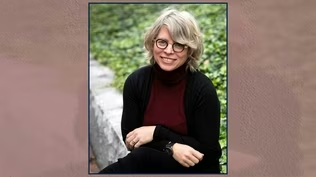
Dialogue Authors Collection
Conversations with all the authors who’ve appeared on Dialogue on Idaho Public Television.
View Collection
Sun Valley Writers' Conference Collection
A collection of interviews recorded at the Sun Valley Writers’ Conference since 2005.
View CollectionProviding Support for PBS.org
Learn Moreabout PBS online sponsorshipJill Lepore, Ph.D., Historian: Constitutional theorists would say when a constitution is no longer effectively amendable, when it's effectively unamendable, it has no legitimacy.
Marcia Franklin, Host: Coming up.why is it so difficult to amend the United States Constitution, and how does that affect our democracy?
I talk with historian Jill Lepore about that and some of the other themes in her Pulitzer Prize-winning book, "We the People."
That's next on "Conversations from the Sun Valley Writers' Conference."
Stay tuned.
[MUSIC] Announcer: Funding for this program is made possible by contributions to the Friends of Idaho Public Television from viewers like you.
Thank you.
Franklin: Hello and welcome.
I'm Marcia Franklin.
My guest today, Jill Lepore, didn't have any desire to become an historian when she was growing up.
In fact, she started her college career on a R.O.T.C.
scholarship studying math and then decided to become an English major.
That's because Lepore did always know she loved to write.
After auditing history classes at Harvard University when she was a secretary there, though, she decided to go into the field of American Studies.
And that pursuit has led to a robust career as a historian.
Since 2003, Lepore has been a professor of history at Harvard University, where she was once was a secretary.
In 2024 she also became a professor at the Harvard Law School.
But her passion for writing has never dimmed.
She's well known as a staff writer for The New Yorker, and her articles for that magazine were nominated for a Pulitzer Prize.
Lepore is also the author of nearly 20 books, including: "New York Burning," a finalist for the Pulitzer Prize; "Book of Ages," a finalist for the National Book Award, and the bestseller, "These Truths: A History of the United States."
Lepore's 2025 book, "We the People: A History of the U.S.
Constitution," won the Pulitzer Prize for History in 2026.
Her newest book, "The Rise and Fall of the Artificial State," published in August 2026, debuted at #4 on the New York Times Bestseller list.
I spoke with Lepore just a month before that at the Sun Valley Writers' Conference.
Franklin: Well, welcome.
Welcome to Idaho.
I understand you've been to Idaho before.
I know you were in Boise, but you've not been to Sun Valley before.
Lepore: No, it's a first.
Franklin: And you went fly fishing today?
Lepore: I did, yeah.
Caught a few small rainbow trout.
Franklin: Awesome.
Lepore: Yeah.
Franklin: Well, I know you were in Boise in 2025 speaking at The Cabin, and I did not realize until I read a New Yorker article that you wrote that you did speak to young people, but instead of it being, like, a required event, there was some consternation or something like that that you might.?
Lepore: Yeah.
And I'm not sure I have all the details here correct, but I was - I love to go speak at public high schools when I'm visiting a place.
It's a really important part of going to a new city or a new town.
And so I had been asked to speak at what I thought - I think it was going to be like 9,000 students.
Something like all the students in history classes at all of the Boise high schools, and they'd be bused over to some big auditorium at some, one of the bigger schools.
This was in last fall, so (the) Charlie Kirk shooting I think was in September of that year.
So I was told that some parents had objected that making it a requirement to see me constituted political indoctrination, liberal political indoctrination.
So, because it was going to be a mandatory activity.
I was lecturing, just giving a history of the Constitution.
And so students could opt in to come.
So it was like 3,000 students instead of 9,000 students.
It was great.
The students were fantastic.
The faculty were fantastic.
It was, like it was tremendous, but it was like only the students who had chosen to be there, as opposed to the poor kids who had got left behind, probably watching something on TV.
Um, so I don't know.
It was the first time I've, I've really encountered anyone directly accusing me of political indoctrination.
I mean, like, you know, I'm not that person.
I'm not a flamethrower.
I'm not; it was, it was, it was a misapplication of what was in any event a really ridiculous policy, right?
I mean, parents shouldn't decide who comes and who does not come to a school.
And preventing kids from going to a lecture about the American Constitution seems a real betrayal of the purpose of public education.
But, um, it was a great visit all the same.
Franklin: We seem to be seeing more of this, reaching down into local history classes and you know, tinkering with textbooks and things like that.
Lepore: Yeah.
I mean, honestly, it's been a tumultuous time for about the past decade in terms of American history teaching around the country, and in universities, colleges and universities as well.
I think it just puts public school teachers, librarians in really difficult positions.
And the idea that schoolteachers are not doing their very best, working really hard trying to teach kids the basics of American history, it really troubles me.
Um, and to put kids' education into this political minefield, it's, it's pretty tough to see.
Franklin: Well, some of them may really have been wishing that they heard you, because subsequent to that you won the Pulitzer Prize for this book.
And, uh, how do you hear about that?
How did you hear about that?
Lepore: Hearing about the Pulitzer Prize?
Um, you get a phone call.
I was with a friend of mine.
We were headed out; I think we were going to go kayaking or something.
Got a phone call.
Um, I guess we did go out kayaking.
Then we came back and we stacked wood together for a while, so.
Yeah.
I've been a finalist twice before, so it was nice to win.
Really nice to win.
Franklin: Did you celebrate?
Lepore: Um, stacked wood.
Franklin: There's a metaphor in there somewhere.
Lepore: I think people in Idaho will understand.
Franklin: Yes, people in Idaho will understand that you stacked wood.
Um, let's talk about "We the People."
I mean, as we approached our 250th anniversary in this country, you could have written about any number of subjects.
You chose the Constitution.
And I think I've heard you say colloquially that it was in part because we have a "crappy history of the Constitution for public memory."
What do, what do you mean by that?
What's wrong with the history that we have right now for the public?
Lepore: I think for most people, the Constitution means two things.
It's the sort of visual iconography of it, right?
The parchment with the calligraphic, "We the People" on it, right?
Like, it's the object.
Here's this old-looking document.
And so we know we have an old Constitution.
It's an icon.
And then people think about the Constitution; they think about the Supreme Court.
They probably even picture the Supreme Court building.
And I just think that's a really poor representation of what the Constitution is, was, has ever been, could ever be.
And it's not like, "Oh, people are stupid for thinking that."
I just think, like, we've really kind of evacuated the larger history of the Constitution from most curricula.
Constitutional history used to be taught in history departments.
That stopped decades and decades ago, and constitutional history moved into law schools, where there are a lot of constitutional scholars.
And some of them are interested in history and some of them are not, but they're really interested in constitutional interpretation.
Um, and history departments became dominated by just a very different kind of curriculum, right, as, as generations of American historians turned to social history or cultural history or what we call the new political history.
Maybe they were labor historians, maybe they did African American history, they did women's studies, they did gender and sexuality studies, whatever it is.
But things that migrated out of history departments included economic history, which moved to economics departments, and constitutional history, which moved to law schools.
So it just means that even in college, you're not really likely to be exposed to constitutional history in any sophisticated way.
Even just thinking, if you look at high school textbooks, it's not like they're teaching wrong things about the Constitution, but they, they, you kind of learn about the writing of the Constitution and then that's kind of it.
One of the misperceptions is to fail to remember that 1776, which is what we're celebrating this year, is the 250th anniversary of the Declaration of Independence, but it's also the 250th anniversary of the first written constitutions in the United States were written in the states.
So starting in January of 1776, New Hampshire wrote the first constitution.
And they're, what they're doing is experimenting with, "What even is a constitution?"
England's Constitution is unwritten.
So this was a new thing that the former colonists were trying to do.
They were going, "We're going to write this down."
They were mad that they couldn't point to like paragraph and sentence in the British Constitution that they thought Parliament had violated by taxing them.
They were like, "A constitution needs to be written down."
And so they were experimenting with that and some things worked and other things didn't work.
But the Constitution that the delegates drafted in Philadelphia in 1787 couldn't have been written without these earlier constitutions.
So sort of one correction to offer to constitutionalists would be just like, "The Constitution doesn't begin in 1787.
It begins earlier than that."
And then, it's not like the Ten Commandments etched in stone on the top of Mount Sinai, you know.
It is a, it is a, it is a document that's written to be amended.
Like, if you, um, if you draw up a contract with someone and something changes in your circumstances, you want to be able to amend that contract.
So they put in an amendment mechanism into the Constitution that would make it possible if things in the Constitution weren't working that well or if circumstances just changed, that there would be a way to fix the Constitution, to improve it, to repair it, to correct it.
And this book that I have written really argues that this philosophy of amendment is a founding principle of American constitutional, of American republicanism.
And we have forgotten it because it turned out not to work as well as the framers had hoped that it would work.
Franklin: Yes.
Ultimately, it has become extremely difficult to amend.
I was astonished to learn from your book that there's been 12 thous -- almost 12,000 attempts in Congress alone, not to mention petitions from ordinary citizens over the years.
And, um, we just are at a stasis.
What, it's not, it's been since 1971 since it was meaningfully amended?
Lepore: Yeah.
Franklin: Which was to change the voting age?
Lepore: Right.
From 21 to 18.
Franklin: Yeah.
There was.
Lepore: There was an amendment in 1992, but it was first introduced in 1789.
So it doesn't really count as a new idea.
Franklin: Right.
I mean, you could have chosen a lot of different aspects of constitutional history to write about, but you chose the amendment process.
Um, and I assume it's because you feel strongly that there are effects to the fact that it is so difficult to amend now.
Lepore: Yeah.
I mean, I don't have, I don't have a political agenda.
Franklin: You don't have an axe to grind, yes.
Lepore: I don't have like, "Oh, here are the following amendments I think we should do."
Franklin: Right.
Lepore: Or, "I think we should have a Constitutional Convention."
I don't have an agenda there.
I think that it's -- amendment is a theory of change, right?
History is the study of change.
So is it natural for a historian to be interested in the process of amendment or amendment as a failed process?
Focusing on amendment is a way to tell the story of the history of the Constitution across 250 years, while paying attention to how change happens and what are the circumstances in which change doesn't happen.
So the book kind of asks the question, like, "What are the circumstances in which we do amend the Constitution?"
We do.
We can.
It can be done.
And "What are the circumstances in which we don't and why?"
Why does the United States have one of the least amended constitutions in the world?
Is it because it's so great?
Is it perfect?
Does it need so little change?
Is it because we have worked out other solutions to enact constitutional change.
In this case, largely by way of Supreme Court making decisions.
Franklin: The Supreme Court, yeah.
Lepore: And is, there's a kind of pattern that happens, right?
So we tend to amend the Constitution in bursts.
A bunch of amendments kind of come through at a time.
And then what George Washington called the "Constitutional door," that is the door to amendment, just kind of slams shut.
And no one can open it for a long time, and the court changes the Constitution for a long time.
And then the people get frustrated.
They're like, "We don't want to have the court have all this power over our Constitution."
And then there's a kind of rebellion and -- or in the case of the Civil War, there's a civil war.
And then the people amend the Constitution a bunch, and then the door is slammed shut again and the Supreme Court does its work.
So we're in an era; in other words, thinking about this two-and-a-half century-long history helps us understand this moment in which a lot of people are frustrated with the Supreme Court, thinking it seems to be exercising an awful lot of power over constitutional interpretation that historically really is the power of the people.
So it seems like we're maybe on the cusp of an era in which the people take back again the power to amend the Constitution.
Is that a thing I want?
I don't know.
I honestly don't know.
But it's important to understand kind of where we are.
Franklin: But, but you would posit that not amending the Constitution for so long and putting the power in the courts -- or currently in the Executive -- is not the way the system was designed to function.
Lepore: Absolutely right.
That's, it's not the way the system was designed to function.
And a big reason why the framers put the amendment mechanism in the Constitution was, you know, they were all students of history, and they looked around at how republics had failed in the past.
And they failed when they couldn't change.
And when the only way to change the system of government was through revolution, violent revolution.
And remember, these are people who've just been through a really difficult, painful, long Revolutionary War.
They were not looking forward to more revolutions.
And so they talked about the amendment mechanism as the mechanism of peaceful revolution.
So, the way they talked about, the framers talked about the amendment provision, was that it was a kind of safety valve and that it was the only real mechanism that would prevent the republic from descending into insurrectionary politics.
Franklin: You know, there's a couple ways to amend the Constitution, and we don't want to get too much in the weeds now, but one of the main ways is that an amendment has to pass by two-thirds majority in both the U.S.
House and the Senate.
Then it goes to the states.
Has to be approved by three-quarters of the state legislatures.
Do you think that that bar is just too high now to have three quarters of the...we're so divided by party now that it's made it difficult to.?
Lepore: Yeah.
So at the time that Article Five was written and the two-thirds supermajority and the three-quarters supermajority were put into place, there were no political parties in the United States.
And not only that, but the framers of the Constitution did not expect there ever would be.
Under their notions of political theory, there can't be political parties in a republic, because they'll become tyrannical and they'll destroy the country.
So they did not think if there was going to be a republic there would ever be parties.
But of course, by 1800 there were political parties in the United States.
And that just makes the bar much higher than it was set.
And in our own era of political polarization that's really just off the scales, the math just doesn't, just doesn't work.
Many, many, many, many Americans in many organizations have attempted to amend the Constitution's amendment provision, and always, almost always to make it easier.
And I think that's actually a fairly bipartisan position.
Like it doesn't make any sense to have something in the Constitution that doesn't work.
Franklin: What's the nominal effect, do you think, of this stasis, of not having updated our Constitution formatively since 1971?
Lepore: Legal theorists would say, constitutional theorists would say, when a constitution is no longer effectively amendable, when it's effectively unamendable, it has no legitimacy.
Like, that's part of what a constitution is.
It is something that the people draft, ratify and revise.
It's the enactment of our consent to be governed.
And we are kind of no longer giving our consent if we can't.we can't even deliberate.
It's not like we have to ratify an amendment.
We're not even like; we don't even talk about them.
Like, it's not part of our discourse.
Which is not true in the states.
I don't know how Idaho.states ratify or amend their state constitutions all the time.
Franklin: Yes.
Yeah.
Lepore: And people understand that.
And I think people have a fairly good relationship with their state governments and their state constitutions.
It's like, "Oh, well, you know, we're going to have this big debate.
Are we gonna..." Like, I just think it's healthy for people to be able to vote on matters of fundamental law.
That's what our system is and how it was meant to be.
And example that I often give is, like, it's like, it's a democratic muscle we no longer use, and so therefore no longer have.
We also don't have those deliberative skills.
They're not cultivated through ordinary practice anymore.
I mean, and we don't see them modeled.
Franklin: Another theme in your book I think is that you talk about the veneration of the Constitution -- the way that -- and "Originalism," which of course is becoming more and more popular, including on the Supreme Court, this idea that, "This is the way it was written, this the way it has to be.
We can only interpret these words-- that they're sacrosanct."
And that hardening or calcification is also not a feature that the people who originally drafted the language or approved of it would have wanted.
Lepore: Well, I mean, I think there are plenty of very smart, very good people who will defend Originalism as a mode of judicial interpretation.
Um, I'm not one of them.
I'm unpersuaded that it is a particularly useful mode or certainly not the only way to interpret the Constitution.
But what I would insist on is that it's not original.
It has nothing to do with how the framers understood the Constitution ought to be interpreted.
And it's also not history.
I mean, the word itself isn't coined until 1980.
It doesn't become part of federal government judicial infrastructure until the Reagan second term, when Edwin Meese, who's his head of the Department of Justice, makes Originalism essentially the official policy of the Reagan Justice Department.
So it's really a quite recent vintage.
Of course, it's dominant on the Supreme Court now, um, and has been for the last 20 years or so.
But there's not like a continuous stream of Originalist legal thought across American history.
It is the reigning idea of modernity that people have the right to govern themselves, that "We the People" erect governments and that the governments are answerable to us.
Governments are "By the people, of the people and for the people."
That is a beautiful and crucial idea.
But bowing before it defies the idea itself, right?
Like, you can't erect an altar to something whose purpose was to tear down an altar.
Franklin: You also feel that when the justices look at the Constitution that they shouldn't just be looking at the founding documents and some of the Constitutional Convention minutes of the time, which were sealed for 50 years anyway.
That they should be taking into account more of what Abigail Adams was saying to her husband, or Benjamin Franklin's sister, or some of the people who were disenfranchised but were still trying to make their voices heard.
They should be part of the historical record.
They should be part of what is looked at when the justices discern what something means or should have evolved to mean.
Lepore: Mm hmm.
Yeah.
I just think we need a better and richer and broader constitutional history in order to have a better Constitution moving forward.
If you think about the vast amount of writing by women about equality, liberty and human rights in American history, there's just a huge body.
Like, you could - there's this library of writing by women about equality, liberty, freedom, rights, duties.
None of that has ever been cited in any Supreme Court opinion.
None, like, actually none of it.
Well, did those views just not, did those views not matter?
Whether you're an Originalist or not an Originalist, like, just the Supreme Court does not look to writing really outside of its own opinions and these framing documents -- the Constitution, the records of the state ratifying conventions, the Federalist Papers.
It is a way to take the disenfranchisement and inequality of the past and move it forward through time, when in fact the historical archive that's available there would allow you to really expand and think more clearly about, like, does the, do the views of women and anyone else who couldn't vote just not matter to how we understand constitutional history?
Black men held constitutional conventions in the United States from 1829 until after the Civil War.
More than 200 of them -- state conventions, regional conventions, national conventions, in which they argued about the Constitution.
They published their proceedings.
They discussed constitutional amendments.
Have any of these so-called Black Conventions ever been cited in a Supreme Court decision?
No.
And yet here is, you know, millions of Americans expressing their views about the Constitution.
And, you know, this isn't a "left" history.
It's not like inserting a "left" position into constitutional history.
There's a world of conservative constitutional interpretation that also lies outside this ambit that I tried to fold into my book.
There are a lot of really important constitutional thinkers and constitutional agitators who are conservatives whose accounts are really left out of our story of the Constitution.
There's just really interesting figures who -- we would understand the Constitution better and its history better if we folded them into our understanding.
Franklin: It seems we're in an era now where our Chief Executive can say, "This is what I believe the Constitution to say, or this is how I want it to be."
Lepore: Yeah.
I think, you know, the position of the Trump administration in this second term has been, "If Trump says it's in the Constitution, it is.
If he says it's not in the Constitution, it isn't.
And we'll just act that way until someone stops us."
So it comes down to the Court, but his influence over what the Court is going to say is largely without precedent in American history.
So there's a, you know, real deformity in the separation of powers.
And a huge piece of that is, is, is the utter impotence of Congress.
I mean, Congress has a role in the interpretation of the Constitution as well, in addition to making laws, and Congress has not exercised that.
And maybe that's exciting.
Maybe it's a really important turning point for people to make a commitment to whatever it is that they feel they can gain enough popular support for as the future direction of the country.
Franklin: You are, have written a book that will come out soon called, "The Rise and Fall of the Artificial State."
Talk about what provoked this new book.
Lepore: Yeah.
So, um, I'd really been concerned at witnessing the many ways in which private corporations are subsuming the functions of government and even of the nation-state.
I think it was maybe last year, Sam Altman from OpenAI said he thought it would be great if there was an AI president.
Like, just, we should just replace the President of the United States with AI because the AI could constantly be monitoring what people want and constantly adjusting.
Like, we could just be governed by artificial intelligence.
Like, and he wasn't joking.
This was an actual idea.
But there are many smaller, subtler things that have already happened that are in that fashion, right?
So most public discourse is really not public discourse anymore.
It's owned by private corporations.
You know, places where people are exchanging ideas -- on X or Instagram or TikTok -- are owned by the richest people on the planet.
And not only that, there are more robots than humans on those platforms.
Humans are vastly outnumbered by bots and have been for some years now on each of those platforms.
They're fully privatized, automated spaces, where corporations, terrorists, criminals, state actors, non-state actors are just waging influence campaigns on all of us.
And we believe that is our free public discourse.
It's just not.
That's an artificial state, where the liberal democratic constitutional nation-state no longer exists, but has been replaced by machines owned by corporations that make money off of pissing people off.
So, like, I wrote the book because I wanted to explain how that really strange thing had ever even happened.
It's so, it's so science fiction-y.
I mean, it's something that Isaac Asimov, you know, wrote stories about in 1955.
Like, if we want to know what's going to happen next, we might want to read some old science fiction.
So that's how, that's how the book works.
And I would say it is a, it's a pretty wrenching story.
Franklin: Is this a form of tyranny?
Lepore: Uh, you know, I think that's the question that people have to ask themselves.
Does it feel to you like you have free and full access to fair, free and fair information about the world right now?
Um, or do you feel that the way that you get your information, uh, is controlled by, you know, Sam Altman and Larry Ellison?
I think people find their way to that question when a data center comes to their community.
Like, what's, what's in it for our community to be doing this?
And I think that puts a lot of pressure on corporations that want to build those data centers to explain what it is that they're actually offering.
And I think that's a really important conversation.
Franklin: Well, I'm wondering if maybe this will be the moment that, where the Constitution gets amended.
You know, where there's some sort of crisis with AI or technology that precipitates another amendment.
Lepore: Yeah, I think it puts a lot, it certainly puts a lot of pressure on the Constitution, and it also puts a lot of pressure on our democracy.
So, um, that's, that's tough, but maybe in the end that's a, that's a good kick in the pants.
Franklin: Well, thank you for taking the time.
Lepore: Thanks a lot.
Really nice speaking.
Franklin: .to talk with me.
I really appreciate it.
And I hope you have a great rest of your time here.
Lepore: Thank you.
Thank you.
Franklin: You've been listening to Pulitzer Prize-winning historian Jill Lepore, a professor at Harvard University.
Our conversation was taped at the 2026 Sun Valley Writers' Conference.
My thanks to the organizers of that capstone event for inviting us back again.
If you'd like to watch any of the nearly 90 interviews we've taped at the conference since 2005, head over to the Idaho Public Television website or YouTube channel.
Thanks for joining us.and keep reading!
Announcer: Funding for this program is made possible by contributions to the Friends of Idaho Public Television from viewers like you.
Thank you.













Support for PBS provided by:
Dialogue is a local public television program presented by IdahoPTV
FUNDING FOR THIS PROGRAM IS MADE POSSIBLE BY CONTRIBUTIONS TO THE FRIENDS OF IDAHO PUBLIC TELEVISION FROM VIEWERS LIKE YOU. THANK YOU.