
Trees: Tree Truths
Special | 5m 25sVideo has Closed Captions
Why do we need trees? Find out on Science Trek!
Trees do more than make our world pretty. They are essential to life, providing us with oxygen, cleaning our water and air, protecting our soil and giving homes to 80 percent of the plants and land animals on Earth.
Problems playing video? | Closed Captioning Feedback
Problems playing video? | Closed Captioning Feedback
Science Trek is a local public television program presented by IdahoPTV
Major funding for Science Trek is made possible by the Laura Moore Cunningham Foundation, with additional funding provided by the Idaho National Laboratory, and by contributions to the Friends of Idaho Public Television from viewers like you, thank you.
Trees: Tree Truths
Special | 5m 25sVideo has Closed Captions
Trees do more than make our world pretty. They are essential to life, providing us with oxygen, cleaning our water and air, protecting our soil and giving homes to 80 percent of the plants and land animals on Earth.
Problems playing video? | Closed Captioning Feedback
Where to Watch Science Trek
Science Trek is available to stream on pbs.org and the PBS app.
Science Trek
Science Trek is a place where parents, kids, and educators can watch short, educational videos on a variety of science topics. Every Monday Science Trek releases a new video that introduces children to math, science, technology, engineering, and math (STEM) career potentials in a fun, informative way.More from This Collection
The environment is where we live. It is where all the animals, insects, plants and other living things make their place in the world. It is everything that makes up our surroundings including the air we breathe, the water we drink and the land we live upon. Scientists study many different parts of the environment to learn how these systems work. Learn more about the environment.
Yellowstone: Secrets Beneath Yellowstone
Video has Closed Captions
What are Yellowstone National Park's five types of thermal features? (7m 34s)
Yellowstone: A Most Unusual Neighborhood
Video has Closed Captions
Yellowstone National Park is unlike anywhere else on Earth. (8m 14s)
Weather: Meteorologists At Work
Video has Closed Captions
How do meteorologists forecast the weather? (5m 13s)

Deserts: Cacti, Bees and the Sonoran Desert
Video has Closed Captions
How do Saguaro Cacti survive in the desert? (6m 23s)
Sewage: Sewage Through the Ages
Video has Closed Captions
What shouldn’t you put down the drain or flush away? (5m 59s)


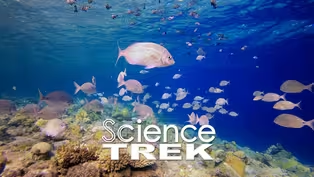
Oceans: What's Under the Surface?
Video has Closed Captions
Oceans cover 70% of the Earth’s surface. Find out more about what’s under the surface. (7m 4s)
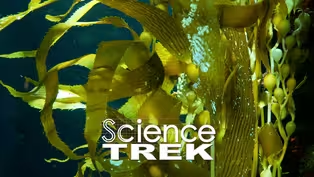
Oceans: Saving Kelp with AI and ROV
Video has Closed Captions
How do you use AI, ROV and an x-box joystick to save kelp? (6m 50s)
Providing Support for PBS.org
Learn Moreabout PBS online sponsorshipJOAN CARTAN-HANSEN, HOST: Trees do more than just make our world pretty.
They give us oxygen, keep our air clean, provide homes, food, medicine, prevent erosion.
Find out more about trees.
[MUSIC] STUDENT: What is the oldest thing on earth?
What's the heaviest?
What's the tallest?
It's a tree!
CARTAN-HANSEN: A tree is a plant.
It's a special kind of plant because it builds up strength by producing wood.
Trees have five basic parts: the roots, the trunk, the branches, the leaves, and the flowers or seeds.
STUDENT: Roots are what trees use to collect water and nutrients.
They also spread out to keep the tree standing upright.
Roots for a 150-foot tall tree stretch under the earth for the area the size of a soccer field.
CARTAN-HANSEN: The trunk is the tree's support and transport system.
The center part of the trunk is called the heartwood, the supporting pillar of the tree.
It's made up of dead cells.
The next layer is the sapwood.
It contains a system of tubes like straws.
It transports water and nutrients from the roots through to the leaves and the other parts of the tree.
The next layer is the cambium.
It makes new sapwood and new bark each year, allowing the tree to grow wider.
The outside layer is the tree's bark.
The outer bark protects and insulates the tree.
The inner bark, or phloem, carries sap full of sugar from the leaves to the rest of the tree.
Bark varies a lot from type of tree to type of tree.
Some of it is so unique that you can identify the tree just by looking at the bark.
STUDENT: You can tell how old a tree is by looking at its trunk.
Every year a tree grows, it adds a new growth ring.
Count the rings and you know how old the tree is.
CARTAN-HANSEN: The way a tree spreads its branches depends upon its species.
Trees reach out to expose their leaves to the sun.
Together, the branches and the leaves or needles make up the tree's canopy.
And like you, trees need food.
Except that trees make their own food.
They use a process called Photosynthesis.
Water and nutrients are sent up from the roots to the leaves.
The leaves take in carbon dioxide from the air.
Using energy from the sun, the leaves combine the water and the carbon dioxide to make sugars that the tree uses to feed itself and then the process, the leaves release oxygen and water vapor into the air.
Trees also produce seeds.
Many trees produce a flower that's pollinated and grows seed.
But some trees produce the fruit we eat, like apples and pears.
Their seeds are protected inside their fruit.
STUDENT: A pinecone is a kind of fruit.
It contains a pine tree's seeds.
CARTAN-HANSEN: The seeds are dispersed by the wind or other animals, take root on the ground, and start growing a new tree.
There are two basic kinds of trees: broadleaf and conifer.
Broadleaf, or sometimes called deciduous trees, have leaves that bud out in the spring and grow full and lush in the summer.
Then the leaves turn color in the autumn and drop to the ground.
Almost all conifer trees have dark green needles that stay on year-round.
Conifer trees basically have two kinds of needles.
Some have short needles that look and kind of feel like combs.
And others have long needles that come in bundles.
STUDENT: And one kind of conifer tree does change color in the fall.
Tamaracks turn a beautiful yellow and then go back to green in the spring.
CARTAN-HANSEN: Trees play an important part in the environment and in our lives.
They shade our homes, protect our soil, and give animals and people a place to live.
We get paper, lumber, medicine, fruit, nuts, even maple syrup, from trees.
And environmental causes like air pollution, climate change, deforestation, and overcrowding can harm trees and forests.
Trees are very good at adapting to the land around them.
They can outlive all other living things, but we humans need to make sure we protect the air, water, and soil so trees can grow.
And we need to plant trees and take care of our forests to improve the environment.
Trees are essential to all of us.
If you want to learn more check out the Science Trek website.
You'll find it at sciencetrek.org.
[MUSIC] Major funding for Science Trek is made possible by the Laura Moore Cunningham Foundation, helping Idahoans reach new heights for generations.
Additional funding provided by the Idaho National Laboratory, mentoring talent and finding solutions for energy and security challenges.
And by contributions to the Friends of Idaho Public Television from viewers like you, thank you.

Video has Closed Captions
Clip: Special | 1m 4s | Why do we "knock on wood?" (1m 4s)

Video has Closed Captions
Clip: Special | 1m 4s | Is there part of a tree in your lipstick? (1m 4s)
Providing Support for PBS.org
Learn Moreabout PBS online sponsorship New Episode
- Science and Nature

Explore scientific discoveries on television's most acclaimed science documentary series.
 New Episode
- Science and Nature

Capturing the splendor of the natural world, from the African plains to the Antarctic ice.

 New Episode







Support for PBS provided by:
Science Trek is a local public television program presented by IdahoPTV
Major funding for Science Trek is made possible by the Laura Moore Cunningham Foundation, with additional funding provided by the Idaho National Laboratory, and by contributions to the Friends of Idaho Public Television from viewers like you, thank you.